Local detail
The Common Mistake
The mistake we see most in Grand Haven isn't neglect, it's misdiagnosis. A door starts groaning or hesitating halfway up on a cold morning, and the owner assumes the opener motor is tired and sprays it with whatever's under the sink. Most of the housing here went up between 1945 and 1988, with the bulk of it clustered in the 1960s and 70s across the surrounding neighborhoods, so a lot of these doors are still running on the torsion spring that came with the house. That spring doesn't care what lubricant you use on the opener chain. If it's lost tension or a coil has started to crack, no amount of WD-40 fixes a door that's dropping unevenly or slamming the last foot of travel. The fix people try is almost always aimed at the wrong part, because the opener is the thing they can see moving and the spring is the thing bolted up out of sight above the header. By the time the noise is bad enough to notice, the spring is usually already past the point where tightening a bolt helps. That's the pattern worth knowing before you start troubleshooting.
The area
The Situation
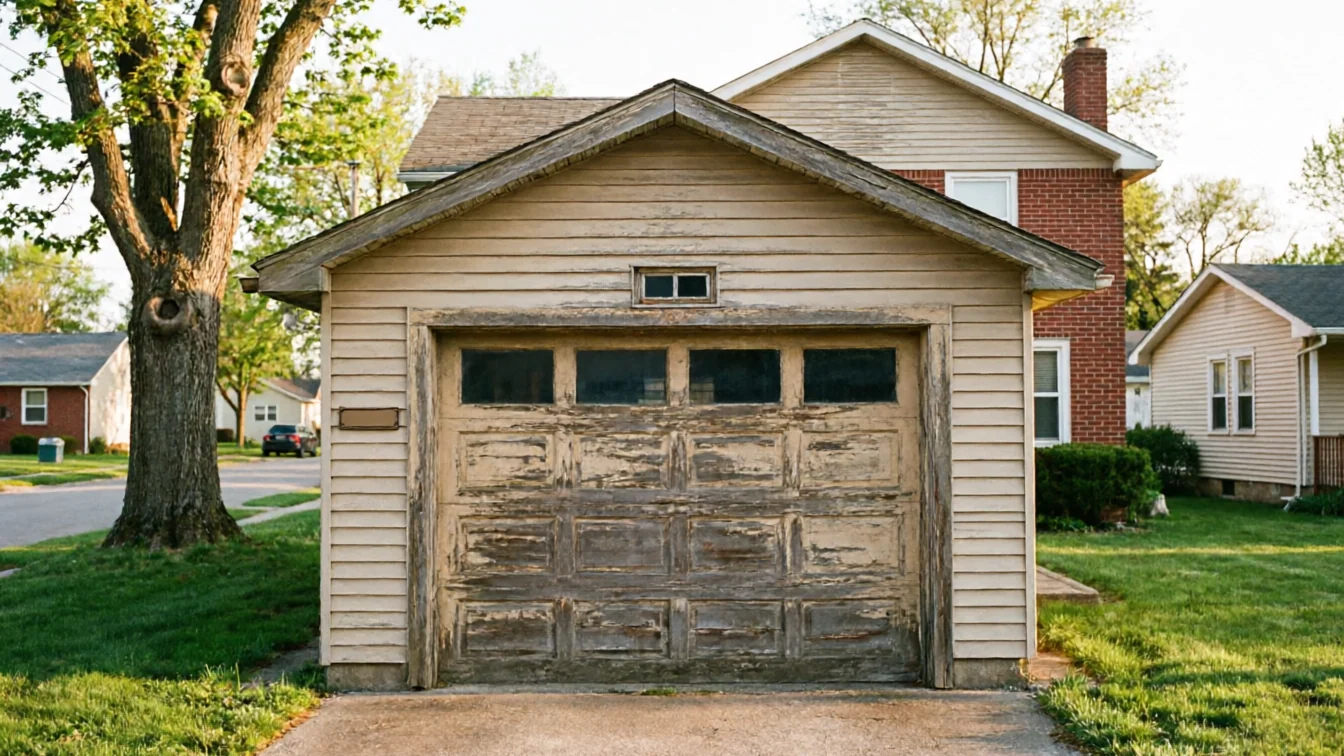
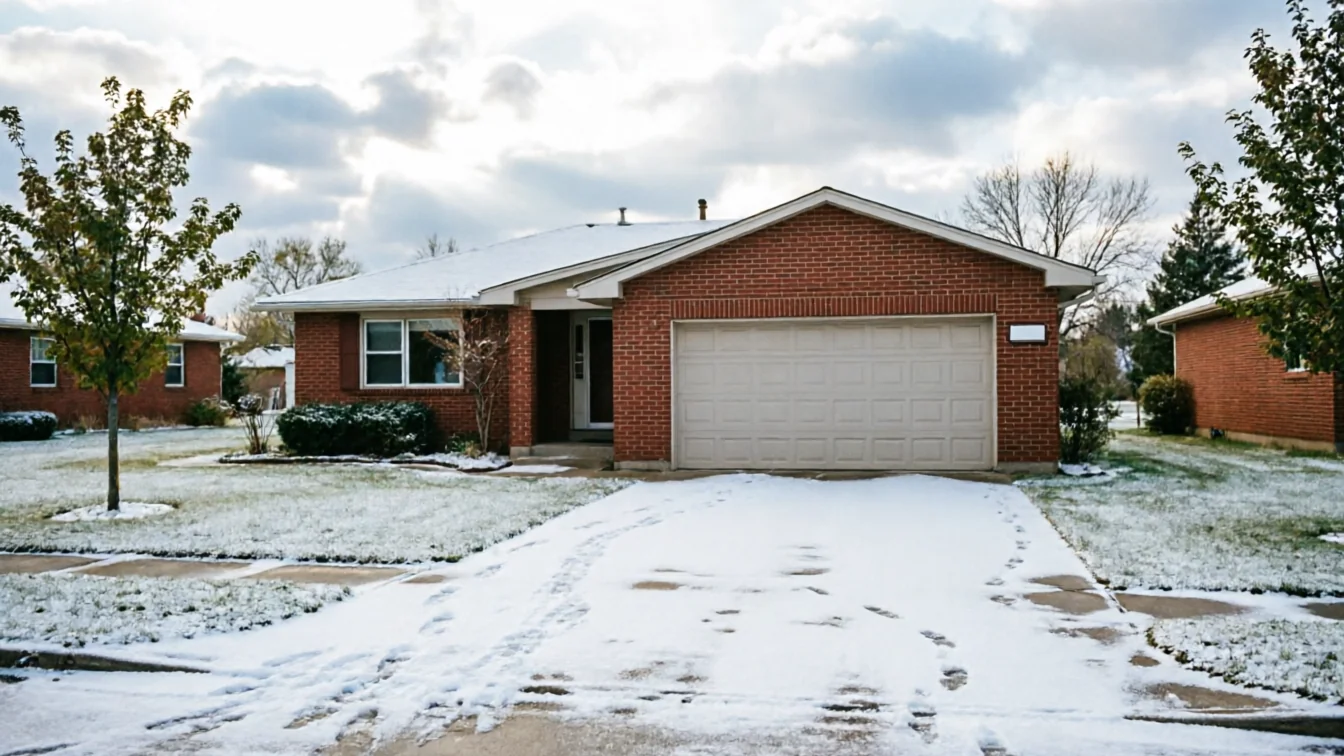
With a median build year of 1972, most garage doors in this area are mounted on hardware that's five decades old even if the door panel itself has been swapped once along the way. Torsion springs have a service life measured in cycles, not years, but cold steel fatigues faster, and a spring installed during the Nixon administration on a house that's seen fifty Michigan winters has taken more cycles under more stress than the spec sheet ever assumed. Across the service area there are roughly 8,791 owner-occupied houses out of about 16,402 households, and a meaningful share of them are sitting on that same original torsion bar and center bearing. The galvanized coating on springs from that era wasn't built to the standards used now, so you'll often find surface rust on the coil itself well before the spring actually lets go. That rust is a warning sign, not just cosmetic. If you can see it when the door's up, the spring has probably lost some of its rated life already, and a cold morning is exactly when that shows up.
What we find
When It Stops Being a DIY Job
A torsion spring under tension is not a part to experiment with, full stop, but there's a specific point in winter where DIY stops being a reasonable risk and starts being a real one. If a cable has jumped the drum, if one side of the door is visibly lower than the other, or if you hear a bang from the garage followed by the door refusing to move, the spring has let go or is about to. On a door this old, the winding cone and the bar itself may be seized from decades of surface rust, which means even removing the old spring safely takes more than a wrench and a YouTube video. We'll say plainly: if the broken spring is an obsolete long-bar size that nobody stocks locally anymore, getting the right replacement in hand can take an extra day, and that's a limitation we won't pretend away. Trying to wind a replacement spring yourself on hardware this age, with bearing wear you can't see from the floor, is how people lose fingers. That's the line.
How we work
What the Weather Here Does to It
This area sits in a cold, severe climate band, and that matters more to a garage door than most people assume. Steel contracts as it gets cold, and a torsion spring that's already fatigued from forty-plus years of cycling loses what little flex it has left right when the temperature drops. Grease in the bearing plates and rollers stiffens up too, so the opener motor has to work harder to move a door that's suddenly heavier to lift, which is often the first thing that fails on a severe-cold morning even when the spring itself holds a little longer. Original hardware from the 1960s and 70s wasn't built with the lubricants or coatings we'd spec today, so it feels every temperature swing more than a door installed in the last ten years. None of this means a cold morning causes damage on its own. It means decades of wear plus a cold snap is what finally turns a tired spring into a broken one, and that combination shows up here on a predictable schedule every winter.
Talk to a local pro
Garage door trouble in Grand Haven?
Same-day service with honest, upfront quotes.