Local detail
The Common Mistake
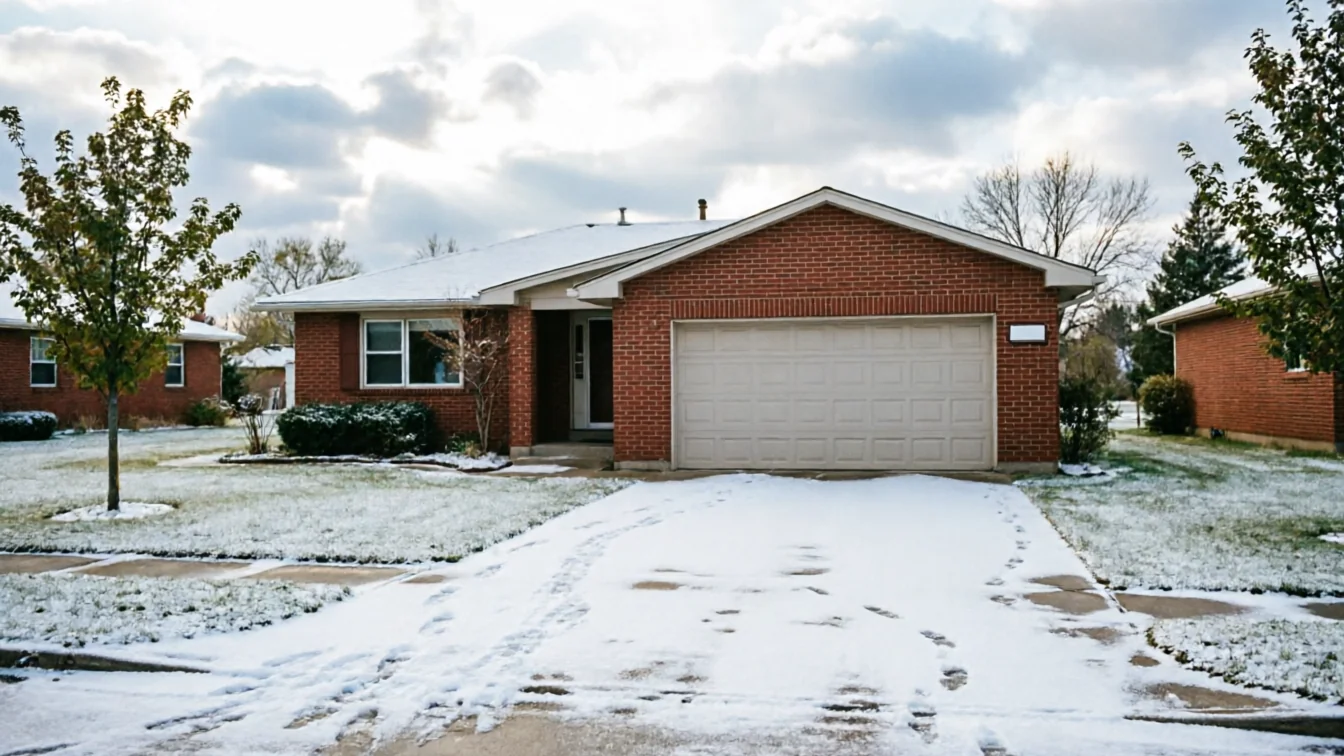
The mistake we see most is treating a garage door like any garage door, anywhere. Most houses in the Grand Haven service area went up between 1945 and 1988, with the median landing around 1972. Across the eleven named areas we work in, the stock skews heavily toward 1960s and 70s construction - original torsion springs, steel tracks sized for lighter doors than what gets sold today, and weatherstripping that was never rated for a severe cold climate to begin with.
Homeowners pull up a general maintenance checklist, do the generic lubrication-and-tighten routine, and then wonder why the door still binds or the spring still groans. The checklist isn't wrong, it's just aimed at the wrong door. A torsion spring wound for a 1972 single-layer wood door doesn't behave the same as one sized for a modern insulated steel panel, and the fix that works on one will strip the threads on the other.
The honest version of this is less satisfying than a tip list: you have to know which era your door and opener belong to before any advice is useful. Guessing costs you a second service call.
The area
The Situation
This service area has 16,402 households and 8,791 owner-occupied houses, and a large share of those sit on hardware installed when the house was built - which, as noted, usually means somewhere between 1945 and 1988. Median household income here is $62,575, which matters because it shapes a real decision a lot of owners face: fix the spring and cable set one more time, or replace the whole door and opener and stop paying for patch jobs on parts rated for a different decade.
We also cover the towns around Grand Haven - Spring Lake and Ferrysburg two miles out, Fruitport six, Nunica eight, Muskegon Heights ten, North Muskegon and Wolf Lake fourteen, Coopersville fourteen, Ravenna seventeen, Beechwood eighteen, Zeeland twenty, and Allendale fifteen. The housing pattern doesn't change much as you move through those towns; it's the same build era, the same hardware generation, the same decisions waiting to be made.
What we find
When It Stops Being a DIY Job
A door that drags a little, or squeaks on the way up, is still DIY territory - tighten the hardware, check the track alignment, lubricate the rollers. Once a torsion spring is visibly stretched or one coil sits open wider than the rest, that's not a tightening job anymore, and on a door this old, the shaft and bearing plate are usually as tired as the spring itself.
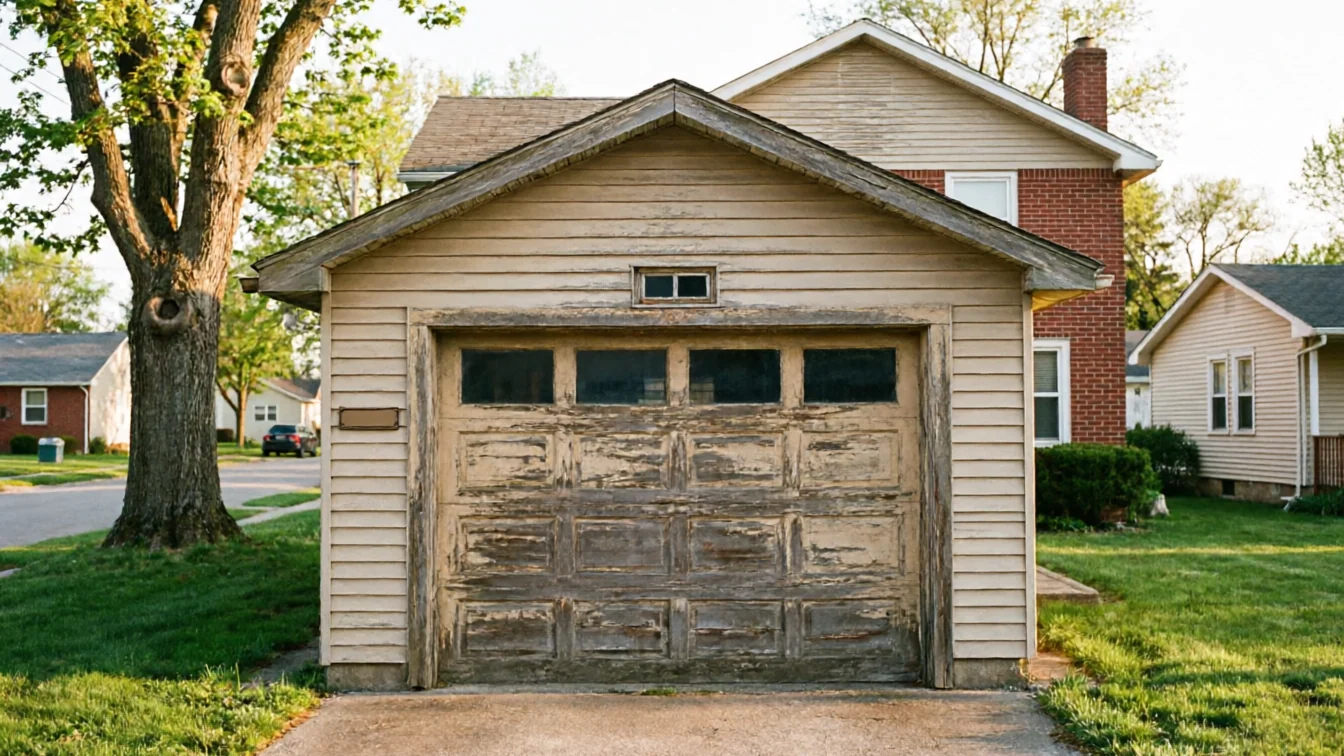
We'll say plainly what we don't do: we don't try to match an exact discontinued panel style from a 1960s or 70s production run. Parts from that era are often gone from manufacturer catalogs, and chasing an exact match can cost more in time than a straightforward panel or full door swap. If your door is from that build window and the spring has already gone once, we'll tell you honestly whether a second repair is worth it or whether you're better off replacing the unit before the next cold snap finds the weak point for you.
How we work
What the Weather Here Does to It
This area sits in a severe cold climate band, and that matters more on a 50-year-old door than a new one. Steel contracts in the cold, and on original tracks and brackets from the 1945-1988 build window, the tolerances were never generous to begin with. A track that was slightly out of plumb in July binds hard in January, and a spring that was already fatigued loses tension faster once temperatures drop.
Weatherstripping from that era wasn't designed for the severe cold swings this area sees, so gaps widen, seals crack, and the door works harder to seat than it should. None of this is dramatic - it's slow wear that shows up as a louder motor, a slower close, or a door that needs an extra push on the coldest mornings. The honest fix usually isn't more lubricant, it's replacing the parts that were only ever rated for a milder, newer-door scenario than the one actually sitting in the opening.
Talk to a local pro
Garage door trouble in Grand Haven?
Same-day service with honest, upfront quotes.