Local detail
The Common Mistake
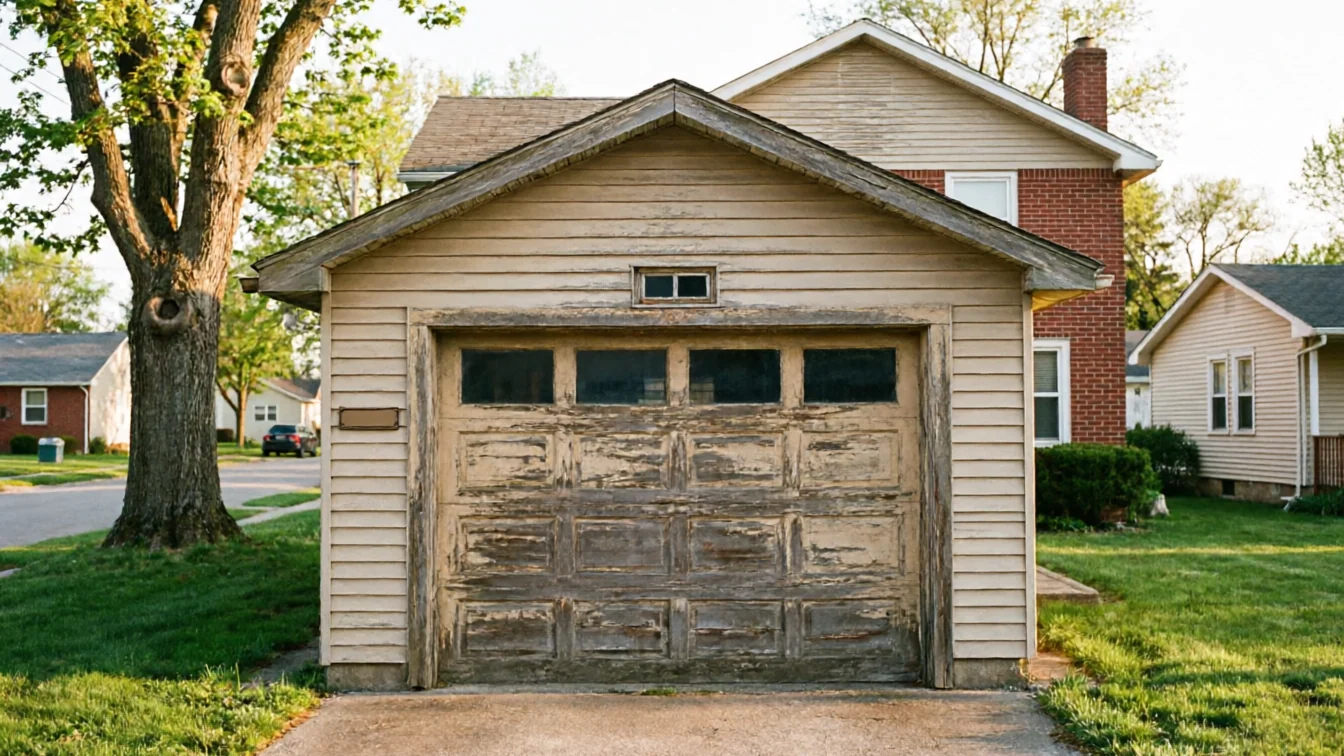
The mistake we see most often around Grand Haven is treating every stuck or noisy door the same way, whether it's five years old or forty. A lot of the houses on this side of the lake went up between 1945 and 1988, with the bulk of that stock dating to the 1960s and '70s. A door and opener installed when a house was built in 1968 is not a door you patch the same way you'd patch one from 2015. The hardware gauge, the drum size, the spring wind - all of it was built to a different set of assumptions about weight and cycle count. People call wanting a quick tune-up on a door that's already outlived its torsion springs twice over, and the quick tune-up isn't the honest answer anymore. The honest answer is that some of these doors are being kept alive with parts nobody makes anymore, and every repair past a certain point is a bet against the next cold snap, not a fix.
The area
The Situation
Across the 11 areas that make up the Grand Haven service area, most garage doors are tied to housing built in that 1945-1988 window, with a lot of it clustering around 1972. That means steel panels that are thinner than what's sold today, tracks sized for lighter doors, and in plenty of cases openers that were added later and never matched to the original hardware. With 8,791 owner-occupied houses in the area and a median household income of $62,575, we're not talking about a market where everyone replaces at the first squeak - most people want the door to last, and most of the time it can, if the spring and rollers get real attention instead of a spray of lubricant and a shrug. The judgment call is knowing which original-era doors still have good bones and which ones are just rust and fatigue wearing a coat of paint.
What we find
When It Stops Being a DIY Job
A door built for a 1960s or '70s house usually ran a single torsion spring sized for a lighter panel than what's common now, and when that spring goes, the whole balance of the door goes with it - that's not a job to open up yourself, full stop. If the door is original to a house from that era and the track is bent, pitted, or the drums show wear, you're not fixing one part, you're matching three or four parts to specs that may not exist on a shelf anymore. That's the line: cosmetic noise and a dragging roller, fine to live with a while. A spring under tension, a cable starting to fray, or a panel that's buckled from age - call it in. We won't pretend every old door is a lost cause, but we also won't pretend a forty-year-old spring is worth re-tensioning instead of replacing.
How we work
What the Weather Here Does to It
Grand Haven sits in a severe cold climate band, and that matters more to an older door than almost anything else. Steel contracts in deep cold, and a door built to 1960s-70s tolerances has less give in the seals and less flex in the track before metal starts binding on metal. Houses near Spring Lake and Ferrysburg, just a couple miles off, see the same lake-effect swings we do, and we get the same calls from there - doors that worked fine in October locking up hard once temperatures drop and stay down. An opener that strains on a cold morning isn't usually the opener's fault; it's a spring that's lost tension fighting a door that's heavier than it used to be, in cold that makes every moving part stiffer. That combination is what pushes a marginal repair into a replacement decision faster here than it would somewhere with a milder winter.
Talk to a local pro
Garage door trouble in Grand Haven?
Same-day service with honest, upfront quotes.