Local detail
The Common Mistake
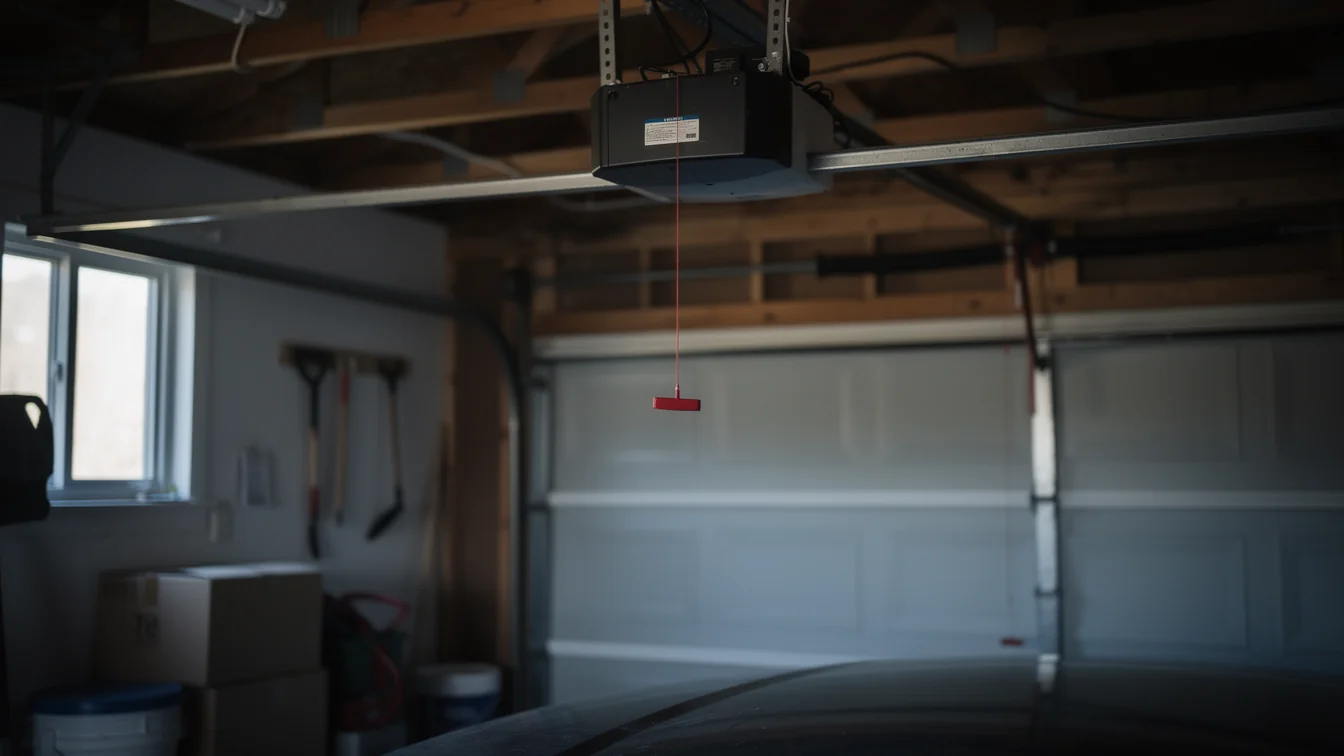
The mistake we see most is treating the opener like it's separate from the house. It isn't. Houses here mostly went up between 1945 and 1988, with the median landing in 1972, which puts a lot of original chain-drive openers from the Carter and Reagan years still bolted to the ceiling, wired straight into a circuit nobody's touched since. Owners assume that when the power goes out, the door is just "stuck" the way a stuck drawer is stuck - annoying but simple. It isn't the same problem. A chain-drive unit from that era has no battery backup built in, because battery backup wasn't standard equipment when it was installed. When the power cuts, the motor has zero drive, full stop, and the only way in or out is the manual release cord, which a lot of owners have never pulled in their life. The second mistake compounds the first: people force the door by hand without disengaging the opener carriage first, which can bend track or snap a roller off a hinge. If your opener predates battery backup, find the release cord before you need it, not during a storm at 11pm.
The area
The Situation
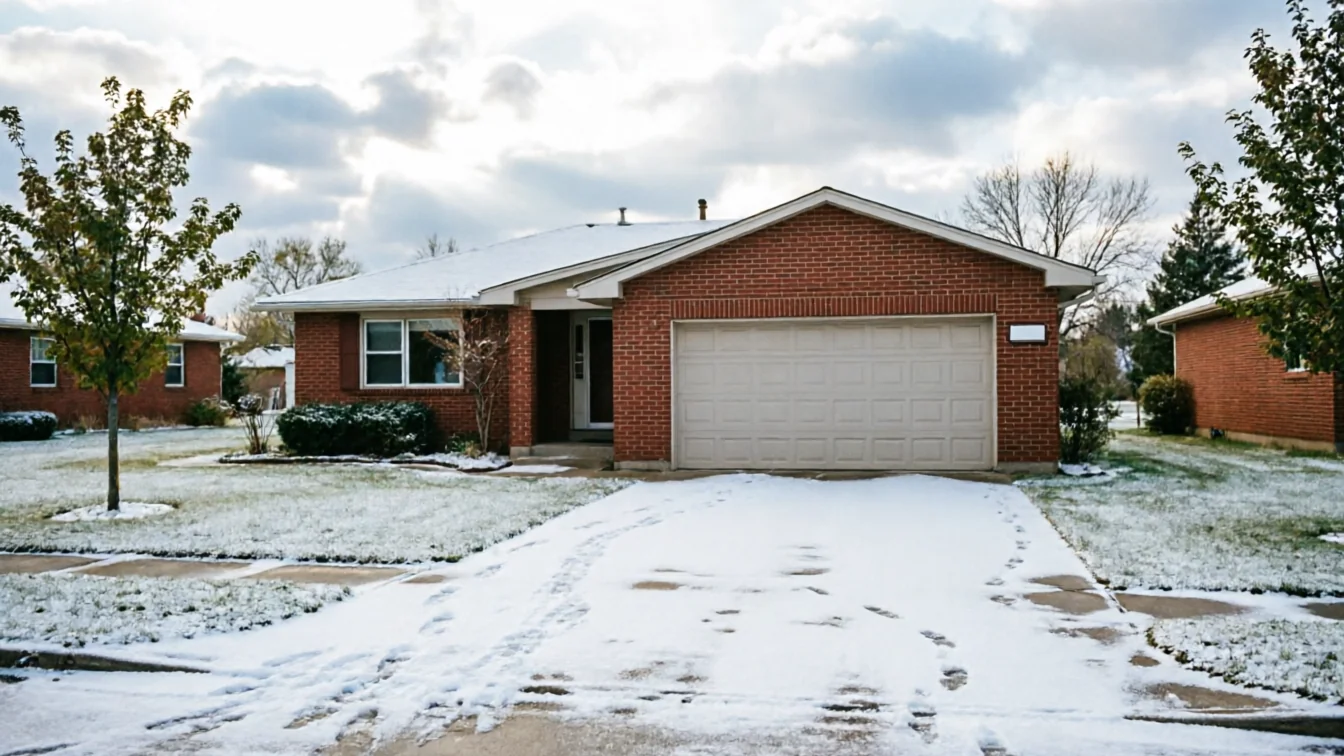
The service area covers eleven named neighborhoods, and the housing stock across most of them sits squarely in the 1960s and 70s. That matters for openers specifically because that generation of garage got one of two setups: a chain-drive opener added sometime in the 70s or 80s as an upgrade, or nothing at all, with the door still running on a pull handle. Either way, the electrical runs feeding that garage were sized for the load of the era, not for a modern opener with a Wi-Fi module, a courtesy light, and a battery backup charger all drawing off the same circuit. With 8,791 owner-occupied houses in the service area, a large share of them built before openers even had battery backup as a standard feature, a dead opener during a power cut is a predictable call, not a rare one. We get it from both directions - the opener itself failing from age, and the opener being fine but stranded because the circuit it's on went down with everything else in the house.
What we find
When It Stops Being a DIY Job
Pulling the manual release and lifting the door by hand during a power cut is fine, and it's what the release is for. What isn't a DIY job is anything past that point. If the door won't lift smoothly by hand once it's disengaged, the problem isn't the power, it's a spring - and a torsion spring under tension is not something to work on with a cord yanked loose, because it can take a finger off. If the opener runs but the door doesn't move, you likely have a stripped gear in the drive head, which on a unit that old usually isn't worth sourcing parts for. And if the circuit itself tripped and won't reset, that's an electrician's call, not a garage door call, before anyone touches the opener again. At a median household income of $62,575, most owners here are weighing a $40 battery backup kit against a full opener replacement, not reaching for whichever is easiest, and that's the right instinct - it's worth a real comparison, not a guess.
How we work
What the Weather Here Does to It
This area sits in a COLD severe climate band, meaning the opener's gears, chain, and logic board all have to work through sustained sub-freezing stretches, and that's exactly when the grid is most likely to hiccup. Cold does two things to an opener at once: it thickens the grease in the drive gear and chain, making the motor work harder for the same lift, and it drains any backup battery faster than it would at 70 degrees, because battery chemistry slows down in the cold. So the worst time for a power cut - deep winter - is also the worst time for whatever backup battery you've got to actually hold a charge. If your opener is original to a house from the 1960s or 70s stretch of the housing stock here, it has no backup battery to drain in the first place, and a winter outage just means the door sits exactly where it was until the power or you, by hand, moves it. We don't stock every control board for every decade-old opener - some of that is special order - so for houses this age, a backup battery retrofit is often the more realistic fix than chasing down original parts.
Talk to a local pro
Garage door trouble in Grand Haven?
Same-day service with honest, upfront quotes.